
One Plant, Weeks of Fresh Greens: The Right Way to Pick
 Suzy·Co-founder, NatureTech·Updated Oct 2026·
5 min read
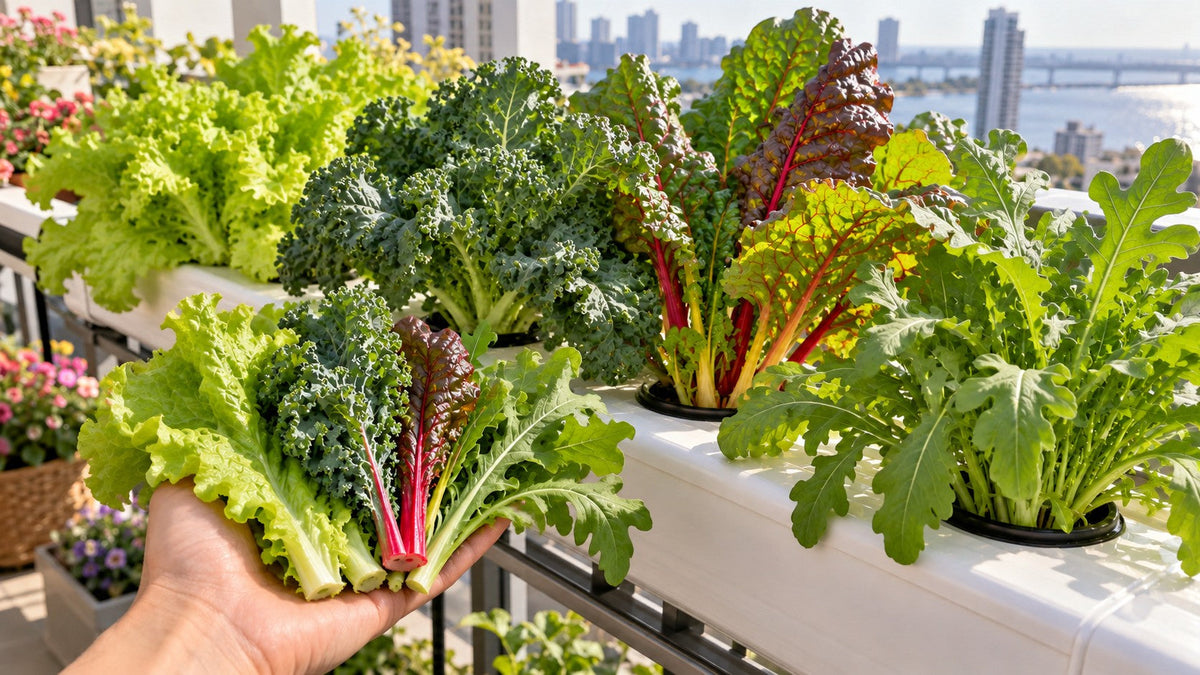
A partial harvest takes only the mature outer leaves and leaves the center to keep growing. Instead of cutting the plant once, you get fresh greens from the same plant, week after week.

There's a moment many new growers know well. The lettuce finally looks beautiful, full and green, and you pull the whole thing for one big salad. Then you're left with an empty spot and a long wait for the next one.
It doesn't have to work that way. Leafy greens can be harvested a little at a time. You take only the mature outer leaves and let the center keep growing, and the same plant goes on giving you fresh greens for weeks.
Why it works
On a leafy green, the oldest and largest leaves are on the outside, and the small new leaves are in the center. The outer leaves are the ones ready to eat. The small cluster in the middle is what keeps the plant growing.
Leave that inner cluster of 4 to 6 small leaves untouched, and the plant carries on making new ones.

Which greens this works for
This way of harvesting, often called cut-and-come-again, works for many leafy greens, such as loose-leaf lettuce, kale, chard, spinach, bok choy, arugula and mizuna.
It does not work for head lettuce like iceberg. Pulling single leaves off a head damages it. Harvest the whole head when it's mature instead, cutting just above the base, and it can grow back a smaller head.
Parsley and cilantro grow from the center too, so you can pick them the same way, outer stems first. Basil is different: you cut the stem just above a pair of leaves.

When to start
Let the plant tell you. Start as soon as it has at least 6 mature outer leaves. For most leafy greens, that's 21 to 35 days after transplanting, depending on the variety and your growing conditions.
After that, you can come back about once a week, as long as the plant has 6 or more mature outer leaves ready.
How to do it
You'll need small, sharp pruning shears and a clean container kept just for the leaves you pick.
1. Sanitize your shears
Wipe or dip the blades in 70% isopropyl alcohol and let them air dry for a few seconds. Clean tools keep invisible pathogens from traveling from plant to plant as you cut.

2. Find the outermost leaves
Look at the plant from above. The oldest, largest leaves are on the outside. On a rosette plant such as spinach, they form the outer ring around the center. Kale grows up a stem, so on kale they are the lowest leaves, and the new growth is at the top.

3. Cut the outer leaves at the base
Hold a mature outer leaf gently and cut it cleanly where the leaf stem meets the base of the plant, with a single, confident snip. Don't pull or tear. And don't leave a stub behind, because a stub rots and lets disease into the crown. Work your way around the plant, taking only the oldest outer leaves. On kale, work from the bottom of the stem upward.

4. Check that the center is intact
Before you put the shears away, look at the middle of the plant. The small new leaves in the center should be untouched.

5. Eat them fresh, or store them dry
Pick only what you need for this meal and leave the rest growing for next time. Rinse the leaves under cool water just before you eat them.
If you want to keep some, don't wash them first, because wet leaves rot faster. Wrap them loosely in a paper towel and keep them in the fridge at 32 to 40°F (0 to 4°C). If they're already washed, dry them well first.

Questions I hear a lot
"How many leaves can I take at once?"
Never more than one-third of the plant's foliage in a single session. For a plant with 8 to 10 mature leaves, that means 2 to 3 outer leaves. Always leave at least 4 to 6 inner leaves so the plant can keep photosynthesizing and grow back.
"I accidentally cut into the center. Is the plant finished?"
Not necessarily. It can often grow back from the base, but the new growth will be smaller. Eat what you cut, and replant if you want a full harvest. Next time, stop before you reach the small leaves in the middle.
"My greens grew in water. Do I still need to wash them?"
Yes, rinse them just before you eat them. A quick rinse under cool water improves the taste and removes any stray particles, even from a clean hydroponic system. Just keep the rinse for the moment you eat them, and store them unwashed.
Your plant is the pantry
I love this way of harvesting because it changes how you think about your greens. Salad becomes something you pick a few minutes before dinner, straight from the plant. A few leaves tonight, a few more next week, and the plant keeps going.
Enjoy every bowl. There's always more growing.

Suzy brings hands-on experience from commercial hydroponics and years of working with home growers, turning practical lessons into clear guidance for growing food at home.
Grow alongside thousands of others.
New guides before anyone else, seasonal tips timed to your harvest, and member-only content.