Root Rot in Hydroponics: How to Spot It, Stop It and Keep It Away
 Diana Kovacovska·Published Jul 2026·
10 min read
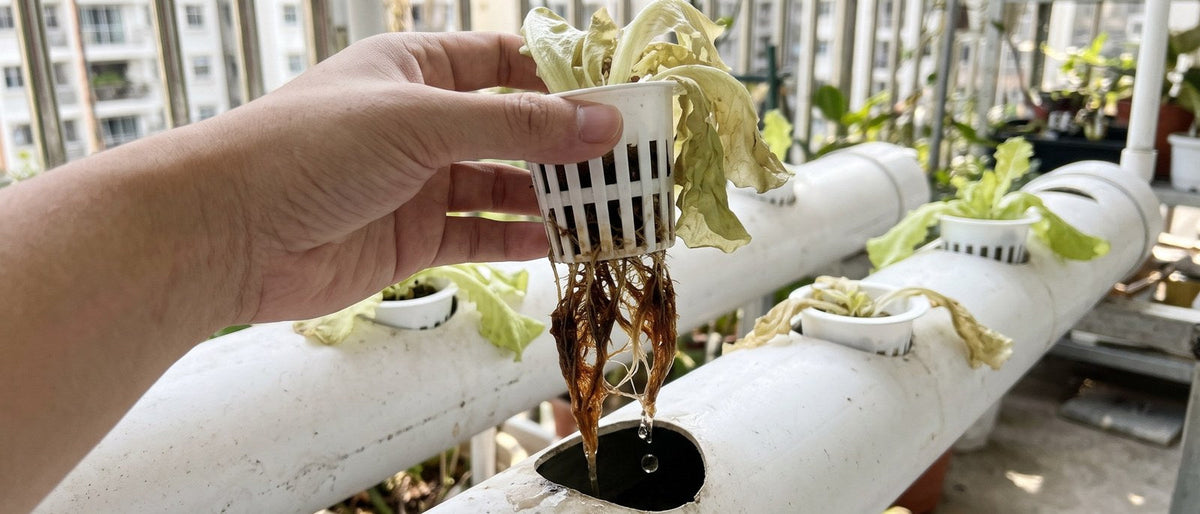
Root rot is the problem hydroponic growers fear most, because it works out of sight. By the time the leaves wilt, the roots have usually been struggling for days. The good news: it almost never comes out of nowhere. It follows warm water, too little oxygen and stressed roots, and every one of those is something you can control.
In a hydroponic system, the roots are the whole story. They hang in water or a thin film of nutrient solution, they drink everything the plant needs, and they have nowhere to hide. That makes them easy to check, which is your biggest advantage. It also means that when something goes wrong in the water, it reaches every plant on the same loop.
What root rot actually is
"Root rot" is the name for what you see: roots that turn brown, go soft and stop working. Behind it, in hydroponics, there is usually a living organism. The most common one by far is Pythium, a water mold. It looks and acts a lot like a fungus, but it belongs to a different group of organisms, and that difference matters for one reason: it is built for water.
Pythium makes spores that can swim. They move through the nutrient solution and steer toward roots, especially root tips that are already damaged or short of oxygen. In a system where the same water flows past every plant, that is how one sick plant can turn into a whole channel of them. Other organisms, such as Phytophthora and Fusarium, can also rot roots, but Pythium is the one home growers meet most often.
Here is the part most guides skip. Researchers agree that it is very hard, and maybe impossible, to keep Pythium out of a hydroponic system completely. It can arrive with water, with seedlings, on hands and tools, and even with small flies such as fungus gnats and shore flies. So the goal is not a sterile system. The goal is roots strong enough, and water healthy enough, that Pythium never gets the upper hand. It is an opportunist: it does the most damage to plants that are already stressed.
How to tell healthy roots from rotting ones
Healthy roots are firm and white to cream, with a fuzz of fine root hairs. Pull a net cup out of the channel and they should look full and fluffy, with a clean, fresh smell, or almost no smell at all.


Rotting roots change in a typical order:
- Early: brown spots on root tips and the finest roots, fewer root hairs, roots that look thin.
- Getting worse: roots turn brown and soft. The outer layer of the root slips off when you pull it gently between two fingers, leaving a thin, stringy core behind. Growers call these "rat tails".
- Advanced: the roots turn slimy and dark brown to black, often with a sour, rotten smell.

Above the water, the first signs are easy to mistake for something else. Plants wilt in the warm part of the day even though the water level is fine, then perk up in the evening. Growth slows. Lettuce may show tip burn, and leaves may turn yellow, because roots that are failing can't take up water and nutrients properly.
Not every brown root is rot
Color alone can fool you. Older roots naturally turn cream or light tan. Some crops grow colored roots: red chard and beets, for example, can have red or orange roots that are perfectly healthy. And some nutrients or additives can stain roots without harming them.

So go by touch and smell as well as color. Firm roots with a clean smell are healthy, whatever their shade. Soft, slimy roots that peel and smell bad are not.
Why it happens: the conditions Pythium loves
Root rot is almost always a story about conditions, so this is where prevention lives.
Warm water
Water temperature is the biggest lever you have. Warm water holds less dissolved oxygen: at 68°F (20°C), water can hold about 9 mg of oxygen per liter, at 77°F (25°C) about 8.3, and at 86°F (30°C) only about 7.6. At the same time, warmth makes the roots breathe faster, so they need more oxygen just when there is less of it. And some Pythium species grow faster in warm water. Keep your nutrient solution at about 64 to 72°F (18 to 22°C). Above about 82°F (28°C), the odds turn clearly in Pythium's favor.

Too little oxygen around the roots
Roots need oxygen as much as they need water. Roots that are short of oxygen get damaged at the tips, and damaged tips are exactly where Pythium gets in. In a channel system the oxygen comes from the thin film of water flowing past the roots, so a pump that stops, a blocked channel or a reservoir that runs low all cut the supply. In deep water systems, the air pump and air stone do that job.
Stress and damage
Anything that hurts roots opens a door: rough handling at transplanting, a nutrient solution that is far too strong, or roots that dry out when the water level drops. Overcrowded roots that fill a channel and slow the flow are another common one in older plants.
Dirt in the system
Leftover roots and plant debris from the last crop, slime in the channels and algae all feed the problem. Algae grow wherever light reaches the nutrient solution, which is why covering empty planting holes and keeping the reservoir closed matters more than it seems.
How to prevent root rot
Prevention is a handful of habits, most of them part of your normal routine.
- Keep the reservoir cool: shade it, keep it out of direct sun, and check the water temperature on hot days. In a heat wave, adding frozen water bottles to the reservoir helps.
- Keep the water moving: check that the pump runs and the water flows through every channel. If your system alerts you when the pump stops, keep those alerts on.
- Look at the roots every week: lift one or two net cups during your weekly reservoir check. You'll see trouble long before the leaves do.
- Keep EC and pH in range: a solution that is far too strong stresses the roots, and a meter that reads wrong hides it, so calibrate your EC meter now and then.
- Block the light: cover empty planting holes and keep the reservoir closed, so algae can't grow.
- Start clean: refresh the nutrient solution every month, and clean and disinfect the system between crops.
- Start with healthy seedlings: check the roots of anything you bring in from a nursery before it joins your system.
What to do if you find root rot
Let's be honest about one thing first. Once Pythium has a real hold on a plant, there is no product that turns brown, slimy roots white again. What you can do is protect the rest of the system and give the plants that are only lightly affected a real chance to grow new roots.
1. Check the conditions first
Measure the water temperature, check that the pump runs and the water flows, and check EC and pH. If one of them is off, that is your cause, and fixing it is the most important step of all. Without it, everything else is temporary.
2. Remove the worst plants
Take out plants with slimy, dark roots straight away, net cup and all. They won't recover, and they keep releasing spores into the water you share with every other plant. Throw them out, not into the compost.
3. Change the water
Empty the reservoir, wipe out any slime, and refill with fresh nutrient solution at the right strength and temperature. If many plants are affected, it is often better to end the crop, clean everything and start again than to keep fighting.
4. Watch for new white roots
Plants that only had a few brown tips can recover once conditions are right. The sign to look for is new, white, firm roots growing out of the cup. No new roots means the plant isn't coming back.
5. Clean the whole system before the next crop
Between crops, empty the system, remove every bit of old root and debris, scrub the channels and reservoir, and disinfect them. A diluted bleach solution or a hydrogen peroxide product works for this. Follow the label, rinse very well afterwards, and only then refill.
What about hydrogen peroxide in a running system?
You will read a lot of advice about pouring hydrogen peroxide into the reservoir while plants are growing. The evidence for it is thin. It breaks down into water and oxygen fairly quickly, it doesn't heal roots that are already rotting, and too much of it damages roots in the same way it damages algae and microbes. In one university trial in a hydroponic system, a regular 3% product at the tested dose didn't even reduce algae, while stronger peroxide products at higher doses held back lettuce growth. We prefer to use it where it clearly works: to disinfect an empty, clean system between crops.
Products with beneficial microbes are a different approach. Some are labeled for hydroponic use, and they work as prevention, added to young plants before a problem starts. They are not a rescue for plants that are already sick.
Common questions about root rot
What does root rot look like in hydroponics?
Roots turn brown and soft, lose their fine root hairs, and later become slimy and dark, often with a bad smell. The outer layer of a rotting root slips off easily, leaving a thin, stringy core. Above the water, plants wilt in the heat of the day, grow slowly or turn yellow.
Are brown roots always root rot?
No. Older roots naturally turn cream or tan, some crops such as red chard and beets have colored roots, and some nutrients stain roots. Firm roots with a clean smell are healthy, whatever their color. Soft, slimy roots that peel and smell bad are rotting.
What causes root rot in hydroponics?
Usually a water mold called Pythium, which takes hold when conditions stress the roots: warm water, too little oxygen, a pump or flow problem, damaged roots, or a dirty system. It is very hard to keep Pythium out completely, so the real protection is keeping those conditions right.
What water temperature prevents root rot?
Keep the nutrient solution at about 64 to 72°F (18 to 22°C). Warm water holds less oxygen while the roots need more, and above about 82°F (28°C) conditions favor Pythium.
Can plants recover from root rot?
Plants with only a few brown root tips can recover once the cause is fixed. New white, firm roots are the sign. Plants with slimy, dark roots won't recover and should be removed so they don't spread the problem.
Does hydrogen peroxide cure root rot?
No. It doesn't heal roots that are already rotting, it breaks down quickly in the water, and too much of it damages roots. It is useful for disinfecting an empty, clean system between crops, following the product label.
Does cinnamon help with root rot?
We found no trial showing that cinnamon controls root rot in a hydroponic system, so we don't recommend adding it to your reservoir. Cool, moving, clean water does far more.
Can root rot spread to my other plants?
Yes. Pythium spores swim in water, so in a system where the same solution flows past every plant, one sick plant can affect the others. Remove badly affected plants quickly and change the water.
How often should I check the roots?
Once a week is enough for most home systems. Lift one or two net cups during your weekly reservoir check, and check more often in hot weather.
Here's to cool water, white roots and a garden that never gives Pythium a chance.
Not sure what your plants need?
Vegardi knows your system, your crops, and your climate, then tells you exactly what to do and when.

Everything here is written and edited by our in-house growers. We turn hard-won expertise into clear, usable guidance, and we keep it free, because the more people growing, the better. Have a question? Drop it in the comments. Let's keep growing, together.
Grow this next
Keep growing with us. It's free.
Join the Growers' Club for our best professional growing content, the kind we usually sell, plus first news, gifts and perks only members get.
We couldn't add you just now. Please try again.
One click to unsubscribe. We never share your address.
Almost there.
Check your inbox and confirm your email to join.
One quick question: what matters most to you in a hydroponic system?
We couldn't save that just now. Please try again, or skip.
SkipThank you.
One click in that email and you're in. While you wait:
Explore the Learn library → See the three systems →